
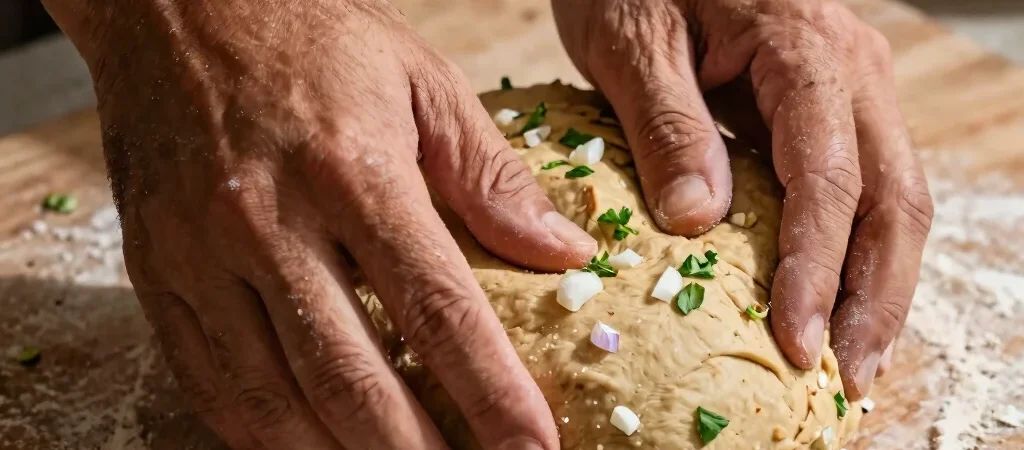
The easiest way to lose Koki’s character is to make the dough too soft. A loose dough is harder to shape thick, round, and rustic, and the onion can disappear into it. Stop adding water while the mixture still feels firm.
Start With The Dry Mix
Mix whole-wheat flour with a little gram flour, if using, before adding finely chopped onion, cilantro, green chili, cumin, and salt. Rub in ghee so the flour takes on a lightly coarse, crumbly feel. Keep the onion and herbs visible; they should read clearly in the dough, not form a smooth paste.
Add Water Slowly
Sprinkle in water gradually and gather the flour with your fingertips. Onion releases moisture, so dough that seems dry at first can come together after a short rest. If it turns tacky, resist adding more flour straight away; give it a moment, then assess its firmness again.
Keep The Shape Thick
Knead only until the dough holds together, then divide it and press or roll it into a thick round. Small cracks and uneven edges are part of the look, not a reason to start over. If the dough crumbles completely when pressed, work in a few drops of water; if it clings to your fingers, let it rest before shaping.
Mark Before The Tawa
Make the signature crisscross marks or prick the surface with a fork before cooking. These openings help a thick Koki cook more evenly through the middle. Keep the marks distinct, and let the roasted spots—not a perfectly smooth surface—show when it comes off the iron tawa.